

Why Track Busway Is Different: Continuous Open-Slot Access vs. Fixed Tap Limitations
Traditional plug-in busway systems often restrict access to predefined tap-off windows, which limits where power can be added as layouts change.
USA TrackBusway provides continuous open-slot access along the run, allowing plug-in power drops and devices to be installed where they are actually needed.
This improves layout flexibility, supports faster reconfiguration, and reduces the need for costly electrical rework when equipment or workstations move.
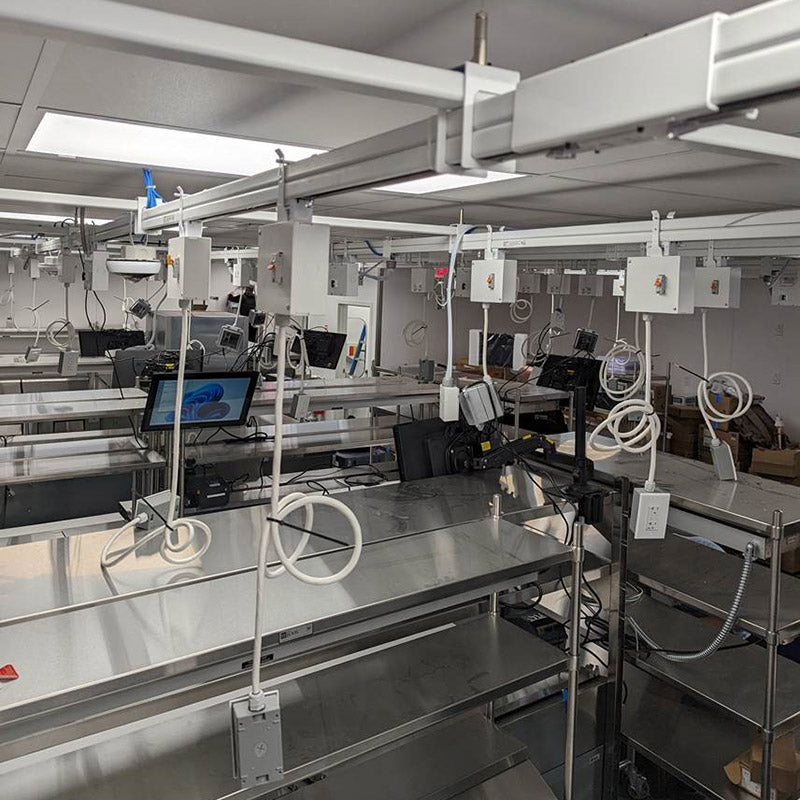
Why Track Busway
Track Busway differs from traditional plug-in busway systems by providing continuous open-slot access along the run.
Traditional plug-in busway systems restrict power connections to fixed tap-off locations. Track Busway allows power to be tapped where it is actually needed as layouts change.
In the United States, continuous open-channel Track Busway is typically applied within the UL 857 framework at up to 225A per feed. USA TrackBusway® addresses that limit by allowing additional feeder points to be added along the run. This allows the system to scale beyond a single 225A feed while preserving the continuous open-slot access that defines Track Busway.
For a complete technical definition, see What Is a Track Busway System?


Single-Phase and Three-Phase Track Busway
Track Busway distributes power overhead through continuous open-channel conductors. Busway fittings tap those conductors to provide multiple voltage options up to 600V on the same run. This allows plug-in devices to access the required circuit configuration where it is needed.
Three-Phase USA TrackBusway can support 120V line-to-neutral power for standard receptacles, 208V line-to-line power for higher-load single-phase equipment, and three-phase power for industrial machinery and process environments.
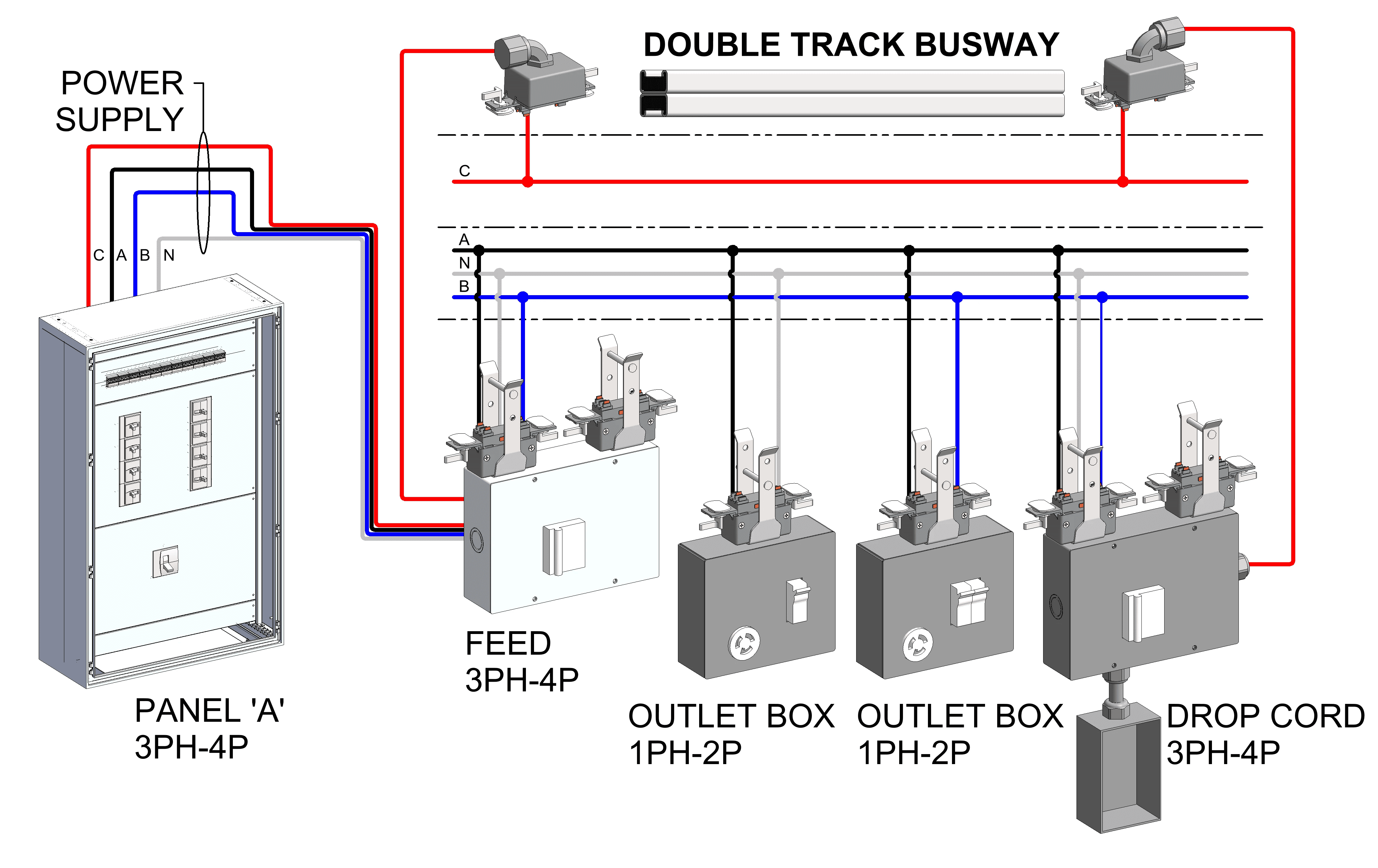
This overhead busway system can support both single-phase and three-phase equipment from one overhead system.
- 1-pole (120V line-to-neutral) for standard receptacles and light-duty equipment
- 2-pole (208V line-to-line) for higher-load single-phase equipment
- 3-pole (208/480V three-phase power) for industrial equipment requiring all three phases

Why Choose USA TrackBusway
Distributed-feed architecture, shorter lead times, and dependable support for evolving facilities.
A flexible busway system only works if it can be delivered, expanded, and supported over time. USA TrackBusway combines the flexibility of Track Busway with a practical distributed-feed architecture that allows power to be added where it is needed, without forcing every run to be oversized from the start.
That approach helps support shorter lead times, more efficient material planning, and simpler long-term expansion. As facilities evolve, customers also need confidence that matching components, replacement parts, and knowledgeable support will still be available.
For industrial, commercial, and data center environments, USA TrackBusway is designed not only to provide flexible overhead power distribution, but also to support the real-world needs that come after the initial installation.
- Distributed-feed architecture supports scalable power expansion
- Short lead times help keep projects moving
- Modular system components simplify future additions
- Matching parts and replacement components remain important over time
- Ongoing support matters as layouts, loads, and equipment change
Why Distributed Power Matters
Traditional busway systems are often built around a single centralized feed, which can require oversizing the entire run.
USA TrackBusway supports a distributed-feed approach, allowing power to be introduced along the run as equipment density and load requirements grow.
Compared to conduit systems, Track Busway also reduces installation time and allows power to be reconfigured without rewiring, making it well-suited for facilities that evolve over time.

USA TrackBusway at a Glance
- More than two decades of plug-in busway manufacturing experience
- Distributed-feed architecture built for scalable, efficient project design
- Short lead times backed by long-term support and parts availability
- Busway systems used on 2,000+ projects
Explore Flexible Busway Solutions
The resources below explain how Track Busway supports flexible overhead power distribution, how it compares with traditional busway systems, and where it performs best.
Busway Fundamentals
Learn how busway systems work, including UL 857 busway standards, voltage configurations, conductor layouts, and plug-in access methods used in overhead power distribution systems.
Track Busway Comparison
Compare USA TrackBusway with traditional plug-in busway systems in terms of continuous access, fixed tap limitations, distributed-feed flexibility, and adaptability for changing layouts.
Industrial Track Busway for Changing Facilities
See why industrial facilities use Track Busway to support movable equipment, changing work cells, overhead power drops, and modular expansion without repeatedly rebuilding the electrical path.
Track Busway System Specifications and Features
Explore Track Busway material construction, voltage options, amperage strategy, unique features, and installation advantages below.
Material & Construction
Track Busway is built as a robust overhead system designed for industrial environments where strength, modularity, and long-term durability matter.
Instead of oversizing conductor mass throughout an entire run, the system is engineered around distributed loads and scalable expansion.
As power needs grow, capacity can be increased by introducing additional feeder points along the run—so the infrastructure remains efficient, manageable, and easier to support overhead.
- Expandable by adding feeds— increase capacity where needed without oversizing the entire run.
- Field-stackable architecture — supports added circuit density within the same suspended footprint.

Voltage
Track Busway is listed to UL 857 busway standards and supports both single-phase and three-phase overhead power distribution within a modular architecture.
The system is designed to accommodate changing layouts and evolving equipment requirements without requiring a complete infrastructure replacement.
- Supports single-phase and three-phase configurations within one overhead system.
- Modular layout flexibility that allows future changes without rewiring.

1×3-Pole
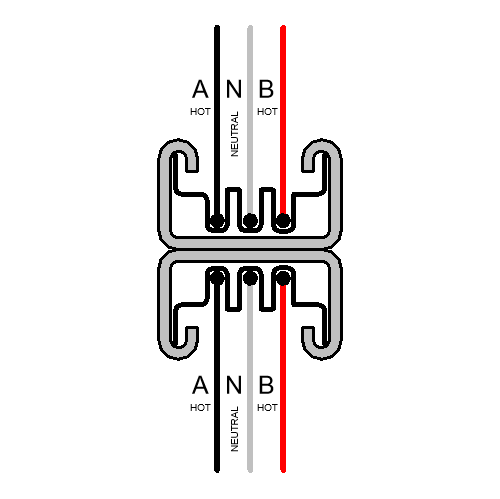
2×3-Pole
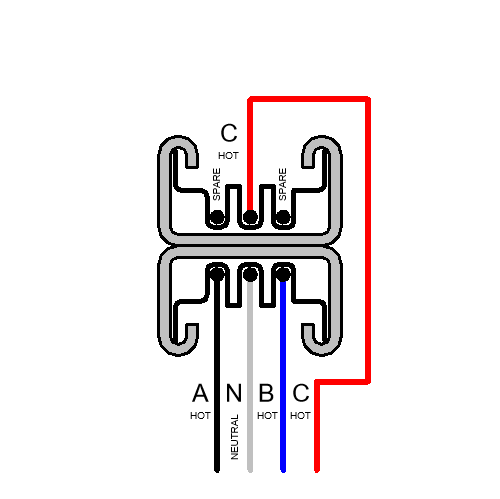
1×4-Pole
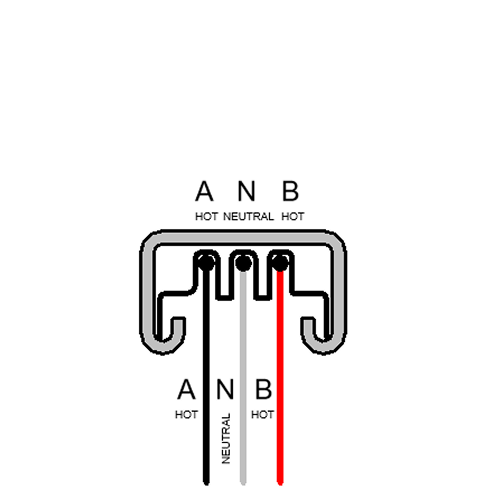
1×3-Pole
2×3-Pole
1×4-Pole
Amperage
Traditional busway infrastructure is often oversized to carry maximum capacity across an entire run—even when loads are localized and distributed.
Track Busway is designed to scale in a more targeted way.
As facilities expand or equipment density increases, additional feeder points can be added along the run to provide more available power where it is needed—without requiring heavier infrastructure across the full length.
This distributed feeder strategy supports scalable capacity while keeping the overhead system efficient, modular, and easier to install and support over time.
Unique Features
Three Ways Track Busway Stands Out
The examples below highlight how Track Busway supports modular layouts, scalable expansion, and additional circuiting options within the same overhead footprint.

Modular Double-Deck Layout
Stack two Track Busway channels vertically within the same suspended footprint to increase circuit density or combine single-phase and three-phase power without adding new raceways.

On-Site Phase-Select Orientation
Track Busway plug-in units for 1-pole circuits can be rotated 180° to select the desired conductor on-site, simplifying load balancing and circuit reassignment.

Over/Under Intersections
Over/under bridge kits route Track Busway over aisles, conveyors, and walkways while maintaining continuous power, allowing floor layouts to evolve without extensive rework.
SPEED – Lead Time & Installation
Faster Than Traditional Conduit
Track Busway installs significantly faster than traditional conduit systems. Pre-engineered sections, modular joiners, and plug-in devices reduce field labor while supporting long-term scalability.

This streamlined process minimizes downtime and accelerates the time it takes to energize overhead power—an important advantage for fast-paced projects.
Installers typically follow a straightforward sequence:
- Preparation: Mark hanger points aligned with structure.
- Hanger Installation: Install hangers ~10’ apart.
- Track Assembly: Join lengths mechanically, then engage electrical joiners.
- Plug-In Integration: Insert power drops, power adapters, or device mounts.
- Commissioning: Verify continuity, grounding, and alignment.

Why Contractors Choose USA TrackBusway
- Reliable U.S. manufacturing and predictable lead times
- 7–10 business day shipping on most components
- Modular architecture reduces field labor
- Stackable design supports multi-voltage overhead layouts
WATCH: Movable PowerDrops plug into Track Busway
USA TrackBusway® delivers tool-free, overhead power using Breakered PowerDrops that plug directly into the system. This video highlights how users can switch between circuits instantly using the Flip Fitter—just rotate 180°.
Built for flexible workflows, this plug-in busway solution eliminates rewiring while keeping power exactly where it’s needed.


View all Track Busway installation, power, and lighting videos in our Video Library →
