


3 Phase Busway Plug-In Units
Track Busway 3 phase busway plug-in units bring flexible 208V and 480V overhead power to equipment, work areas, and outlet points below the run.
This collection covers the broader family of 3 phase busway plug-in solutions, including 3 phase plugs, 3 phase connectors, and 3 phase power outlet options used with Track Busway systems.
Many of these products are also described as 3-pole tap-off boxes because the internal breaker engages phases A, B, and C.

For additional information on Track Busway plug-in units and overhead busway systems, see:
3 Phase Plugs for Overhead Busway
Track Busway 3 phase plug-in units connect equipment to a 3 phase plug-in busway with movable access points along the run. Depending on the application, users may need a 3 phase plug, a 3 phase connector, or a complete plug-in tap-off assembly that integrates directly with the Track Busway system.
Because these units install along the busway rather than at fixed conduit drops, they make it easier to position and reposition three-phase power where machinery, production layouts, or work zones change over time.
For additional installation scenarios, configuration examples, and system overviews, visit the
Track Busway supports flexible 3 phase busway power distribution for motors, conveyors, pumps, machinery, and other higher-load applications that benefit from balanced three-phase power delivered overhead.
Because plug-in units can be added or relocated along the run without fixed conduit drops at every location, the system works especially well in manufacturing, assembly, logistics, testing, and other spaces where layouts evolve.
3 Phase Power Outlet and Tap-Off Options
This diagram shows how Track Busway can deliver 208V or 480V three-phase power through plug-in tap-offs, connector-based drop points, and power outlet configurations used for higher-load applications. It helps explain how 3 phase power can be brought from the overhead busway to the point of use below.
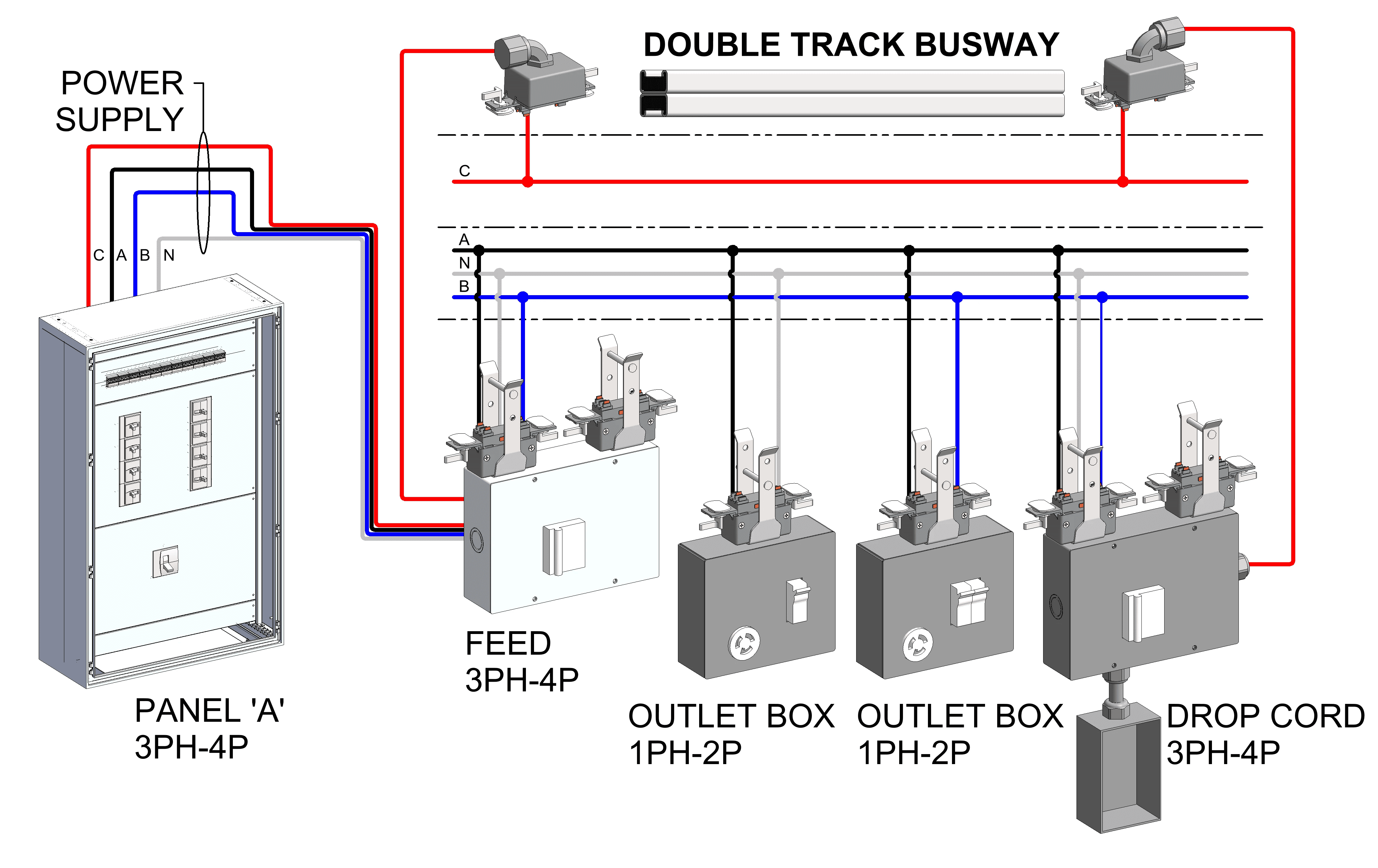
A three-phase Track Busway system can support multiple plug-in strategies along the same run. Single-pole units can serve line-to-neutral loads, two-pole units can serve line-to-line loads, and 3 phase busway plug-in units can engage all three phases to support balanced three-phase equipment such as motors and industrial machinery.
This flexibility allows designers and contractors to combine different outlet and tap-off needs along one overhead system while keeping three-phase power accessible where it is needed.

Three Phase
Double-deck Track Busway includes (2) phases on the bottom and (1) on the top. Factory installed track busway fittings tap the (2) lower deck phases, and the third phase on the top deck.
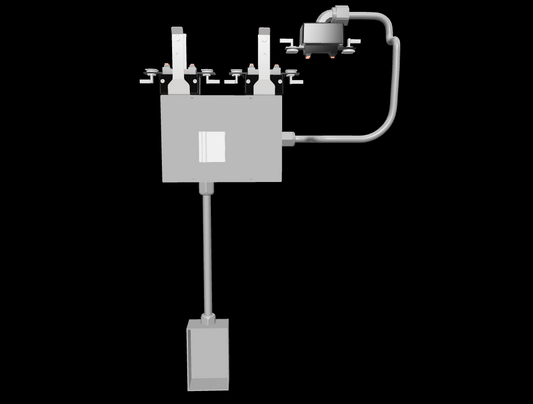


A 3 phase busway plug-in unit is a tap-off assembly that draws power from overhead Track Busway and delivers it to equipment, outlets, or connection points below.
Yes. Track Busway can support 208V and 480V three-phase configurations, depending on system design and the plug-in unit used.
“3 phase plug-in unit” is the broader family description. “3-pole tap-off box” refers more specifically to the internal breaker engaging phases A, B, and C.
Yes. Depending on the configuration, Track Busway can provide 3 phase power outlet access through plug-in units, outlet box style configurations, and other tap-off options.
They are commonly used for motors, conveyors, pumps, machinery, lab equipment, and other higher-load applications that benefit from flexible overhead three-phase power distribution
For the corded drop option, see the dedicated 3 Phase PowerDrop Cord product page. This collection is intended to cover the broader family of 3 phase busway plug-in units.
