


Track Busway System Definition
A track busway is a modular overhead electrical power distribution system that delivers plug-in power along a continuous track. The system allows power drops, receptacles, and equipment connections to be installed anywhere along the run without rewiring. Track busway systems are commonly used in commercial and industrial facilities where flexible electrical distribution and minimal downtime are required
Track Busway is a modern evolution of plug-in electrical busway systems. If you're new to the concept, this guide explains what busway is and the different types used in commercial facilities.
They provide accessible, reconfigurable power without the need for continuous rewiring.
Typical specifications include:
- Voltage compatibility up to 600V (commonly 120V, 208Y/120V, 240V, and 480V configurations)
- Amperage determined by system configuration and circuit design
- Finger-safe insulated conductors housed within a steel track
- A continuous open channel design that allows plug-in power units anywhere along the run
- Optional closure strip accessories to fully enclose the channel where required
Detailed Track Busway system specifications are available below:
For engineers, electrical contractors, and specifiers:
Track busway systems are commonly evaluated as an alternative to conduit and fixed busduct in facilities where layouts change, downtime must be minimized, and overhead power access is required throughout the life of the space.
Track Busway is typically used when:
- Power needs to be accessible overhead
- Equipment layouts change over time
- Downtime from rewiring must be minimized
- Multiple drops are required along a single run
How a Plug-In Busway System Works
In summary: Track Busway distributes power through a continuous overhead open-slot system.
In simple terms, it functions like an electrical rail running along the ceiling that you can tap into anywhere. This allows power connections to be added or moved without running new wires.
Pre-engineered track sections support faster installation and long-term flexibility across industrial and commercial environments.
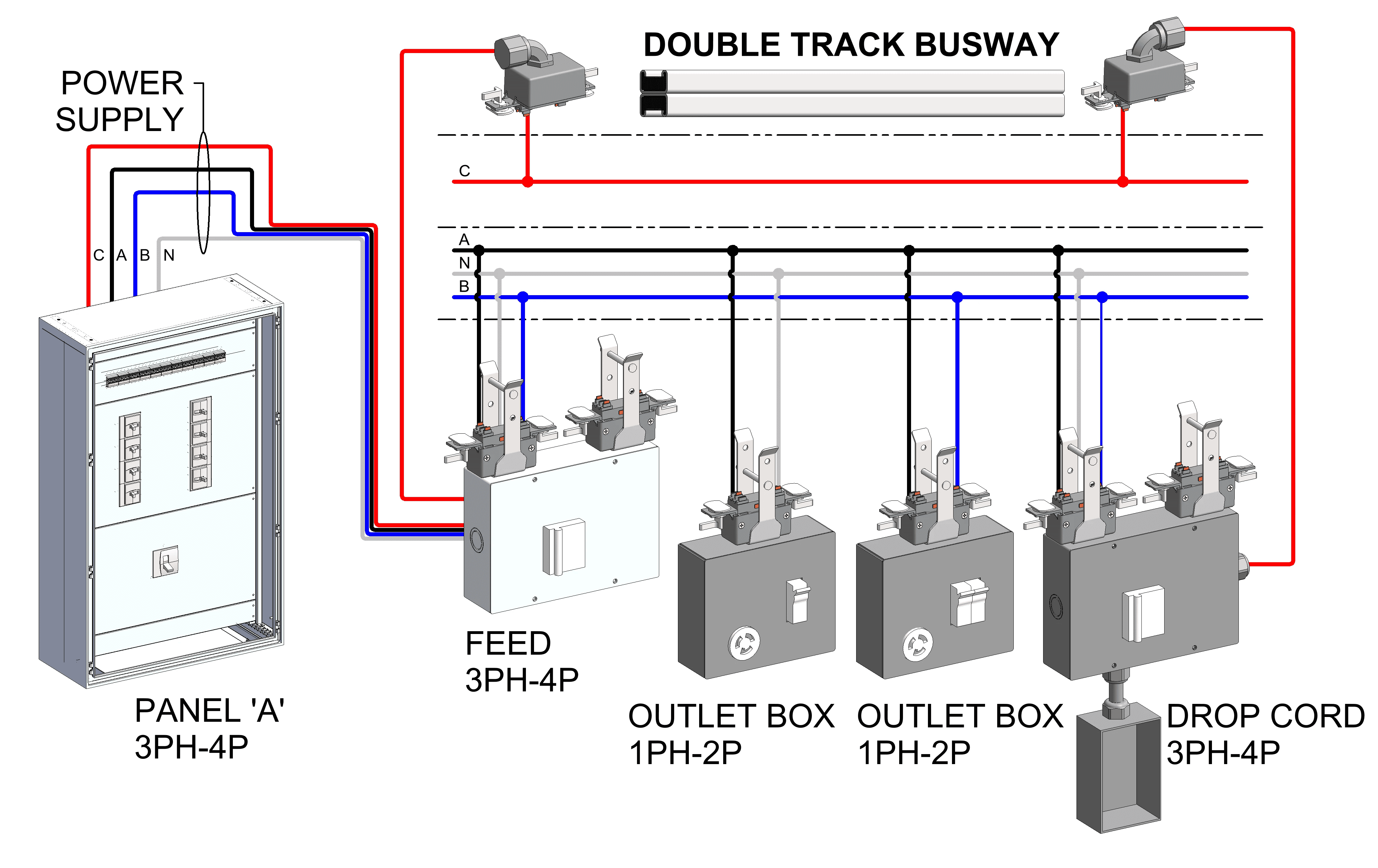
Track Busway System Specifications
| Field | Value |
|---|---|
| Voltage Compatibility | Up to 600V |
| Typical Configurations | 120V, 208Y/120V, 240V, 480V |
| Installation Method | Suspended overhead |
| Tap Locations | Anywhere along the run |
| Safety Standard | UL 857 busway systems |
| Typical Applications | Industrial, labs, retail, flexible workspaces |
Key Components of a Modular Overhead Busway System
- Flexibility – Power drops and devices can be repositioned without rewiring.
- Reduced Downtime – Equipment can be reconfigured with minimal interruption.
- Faster Installation – Pre-engineered sections reduce labor complexity.
- Scalability – Additional drops can be installed as needs grow.
- Cleaner Overhead Layouts – Consolidates power distribution into a single organized system.

Key Components
A Track Busway power distribution system consists of pre-wired track sections, mechanical joiners, hangers, and power feeds.
These components form a flexible overhead infrastructure that allows power drops, lighting, and devices to be added or repositioned without shutting down the system.
Tracks
Pre-wired tracks act as both structural support and power conduits. They typically contain copper or aluminum busbars enclosed in a durable housing.

Factory Installed Fittings
Copper contact pins on a busway fitting electrify a device by tapping directly into the busbars within the track.
Linear Mounting Kit

Busway Fitting

Plug-In Units
Plug-in units are factory-assembled devices that deliver power anywhere along the Track Busway.

Track Busway vs Traditional Conduit and Bus Duct
Track Busway is engineered to safely distribute power overhead using fully insulated conductors enclosed within a rigid steel housing.
Plug-in devices engage through purpose-built fittings that minimize exposure and ensure a secure electrical connection.
Grounding and bonding are maintained continuously along the run through integrated mechanical joiners.
This allows modifications to be made without disrupting adjacent circuits.
Track Busway vs Bus Duct
Ideal Applications for Track Busway Systems

A Track Busway is a modular overhead power distribution system.
It uses a continuously open access slot that allows plug-in devices to be installed anywhere along the run without rewiring.
Unlike traditional conduit systems, Track Busway delivers flexible and scalable power through pre-engineered sections that support fast installation and future reconfiguration.
Frequently Asked Questions About Track Busway
What is the difference between track busway and bus duct?
Track busway uses a continuous open channel that allows plug-in modules to be repositioned. Traditional bus duct systems typically use fixed tap windows.
Is track busway safer than conduit?
Track Busway systems are enclosed and finger-safe while allowing controlled plug-in access points.
Can track busway be reconfigured after installation?
Yes. Power drops can be moved along the busway without rewiring.
What voltages are supported?
Single-phase and three-phase configurations up to 600V are supported.
Summary
Track Busway simplifies power distribution by allowing multiple voltage types to be accessed from a single overhead run. By supporting both single-phase and three-phase power within the same system, it eliminates the need for separate circuits, reduces installation complexity, and provides long-term flexibility as facility needs evolve.


